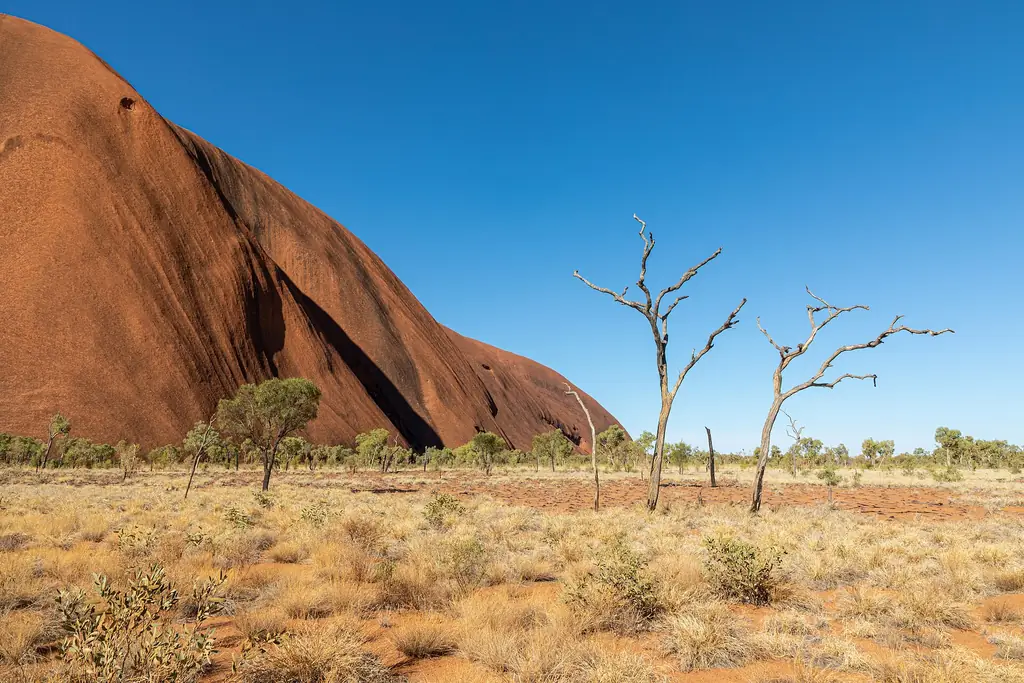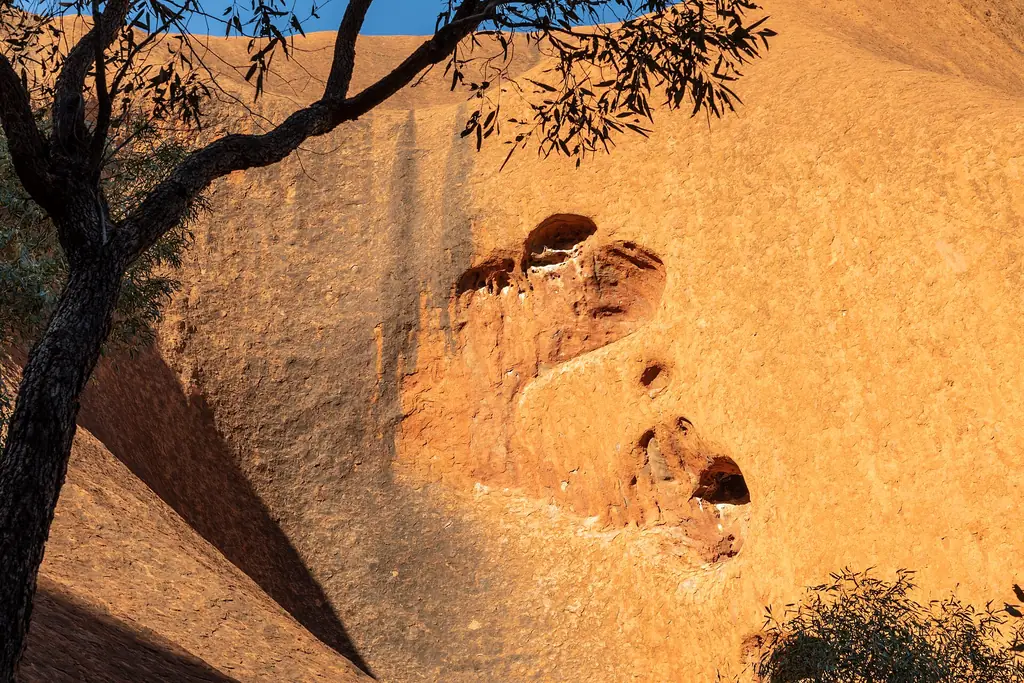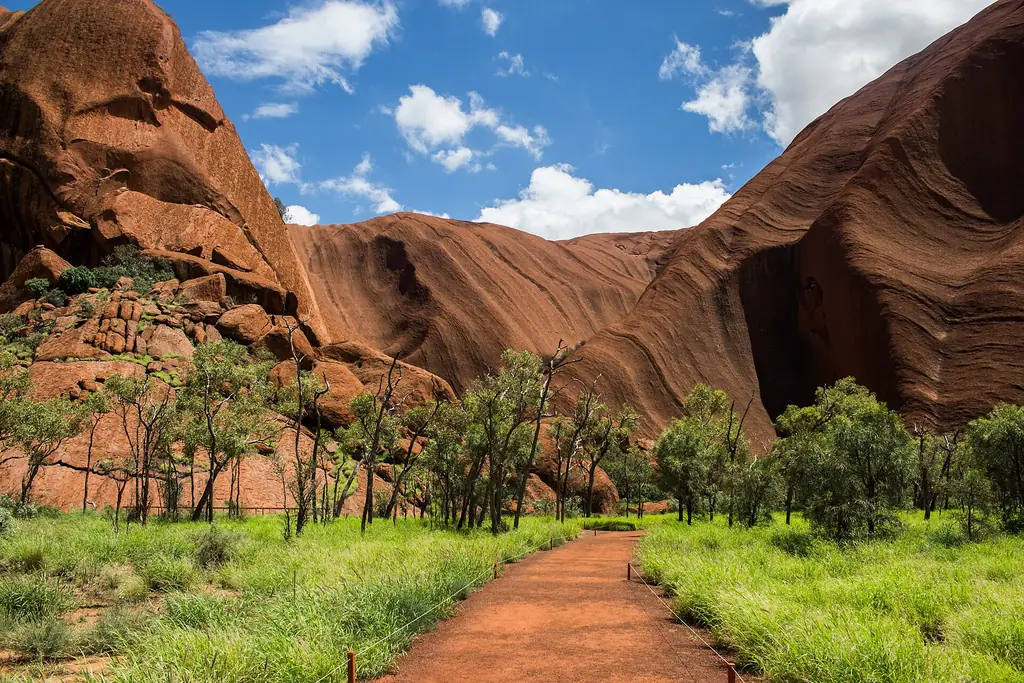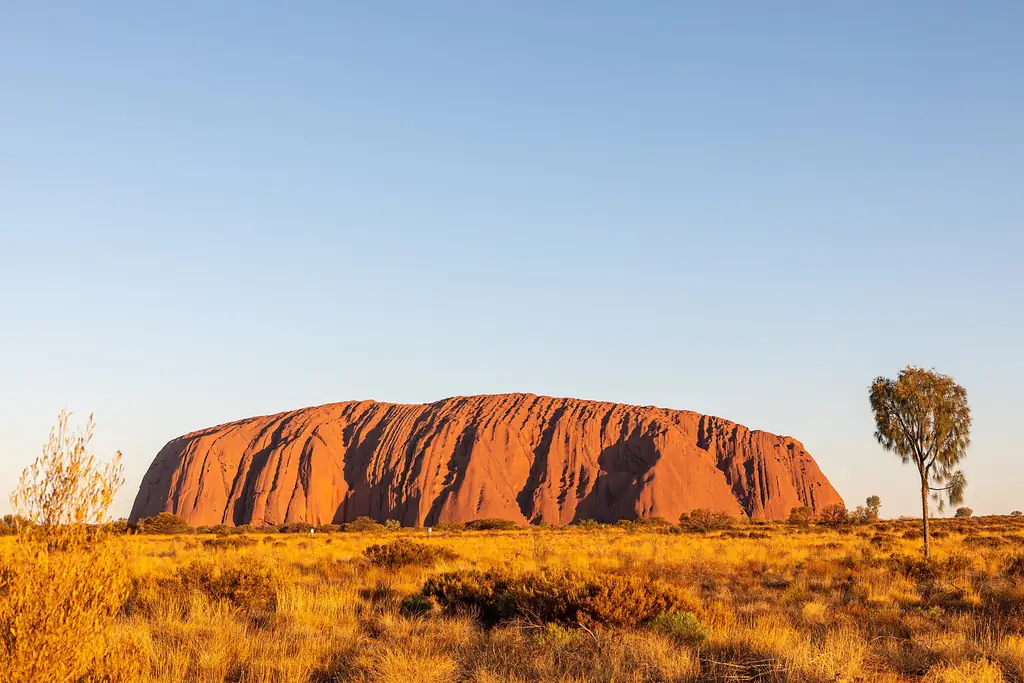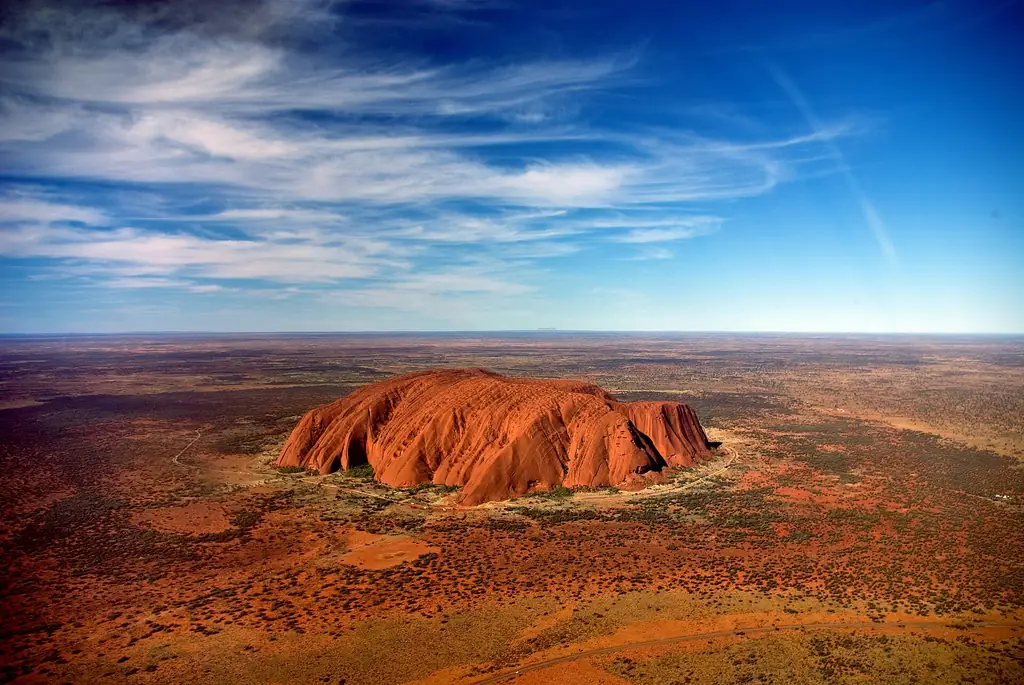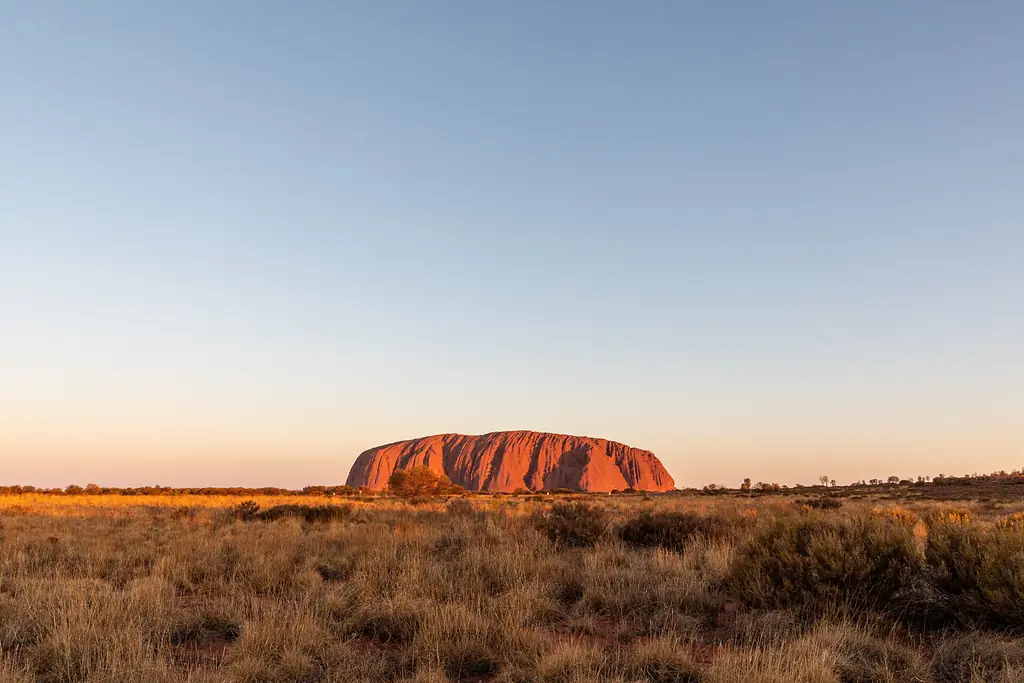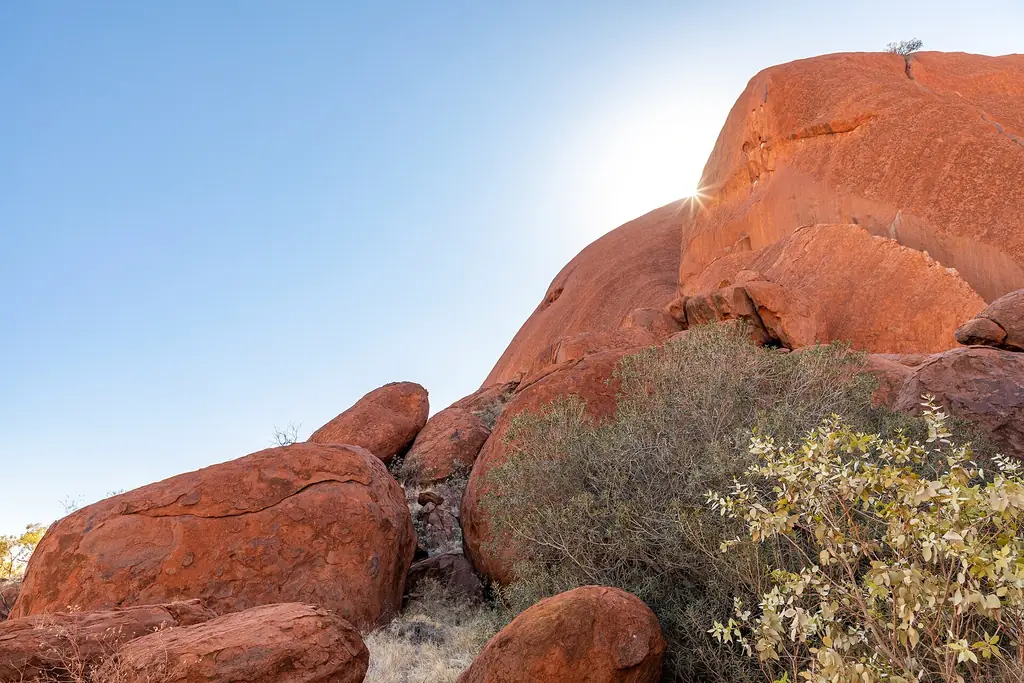
The Cultural Centre sits about 1 km from Uluṟu inside the park, a short drive from the Mala and Kuniya car parks. Its curving buildings were designed to represent the two ancestral snakes Kuniya and Liru.
What is inside
- Tjukurpa displays explaining Aṉangu law, stories and the relationship between people and country.
- Art galleries where you can buy work by local Aṉangu artists — the best way to ensure your purchase supports artists directly.
- Information desk staffed by Parks Australia, with walk advice and ranger talk times.
- A cafe for drinks and light meals.
Why visit first
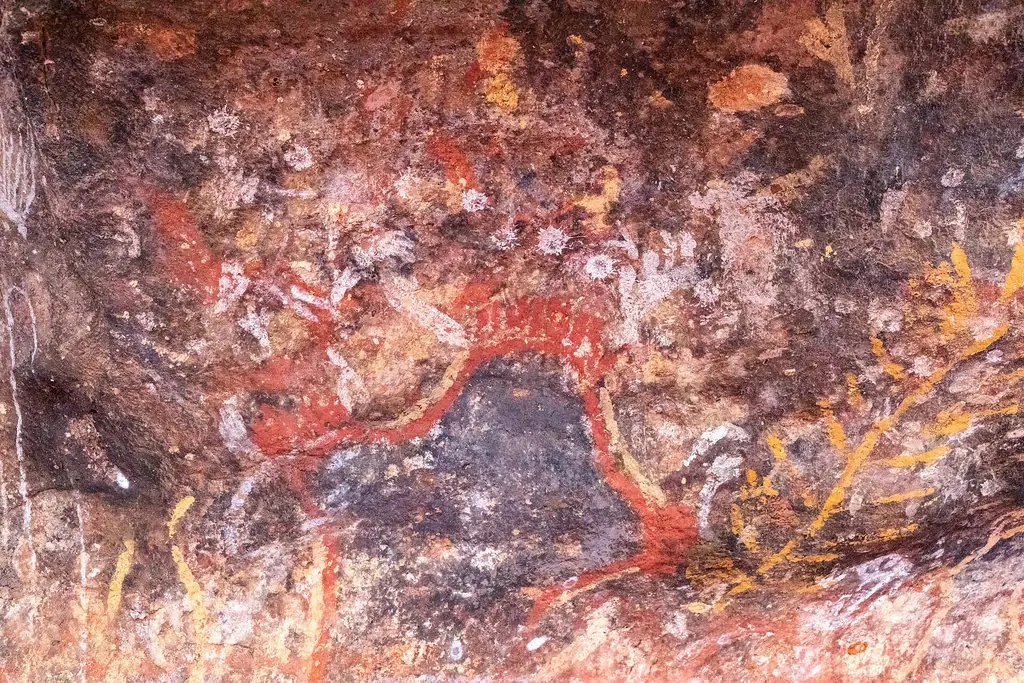
Understanding Tjukurpa changes how you see the rock. It explains why the climb is closed, why some sites cannot be photographed, and what the stories on the walking tracks mean.
Ranger-guided walks
The free Mala Walk departs at set times from the Mala car park. Check the current schedule at the Cultural Centre.
Practical
- Allow at least an hour.
- Photography is not permitted inside parts of the centre — check signs.
- The centre is a good place to shelter during the midday heat.
Buying art responsibly
Art from Aṉangu-owned art centres such as those represented at the Cultural Centre comes with provenance, and a larger share of the price goes to the artist and community. If you buy elsewhere, look for certificates from Aboriginal-owned art centres. Paintings, punu (wood carvings) and tjanpi (fibre) works are among the pieces you may find.
Language you will hear
Aṉangu speak Pitjantjatjara and Yankunytjatjara. You will see words such as palya (hello, good), tjukurpa (law and stories) and wanyu (please) on signage. Using a greeting is appreciated.
Related guides
Frequently asked questions
Is the Uluru Cultural Centre free?
Entry to the Cultural Centre is included with your park pass.
How long should I spend at the Cultural Centre?
At least an hour, longer if you want to browse the galleries.